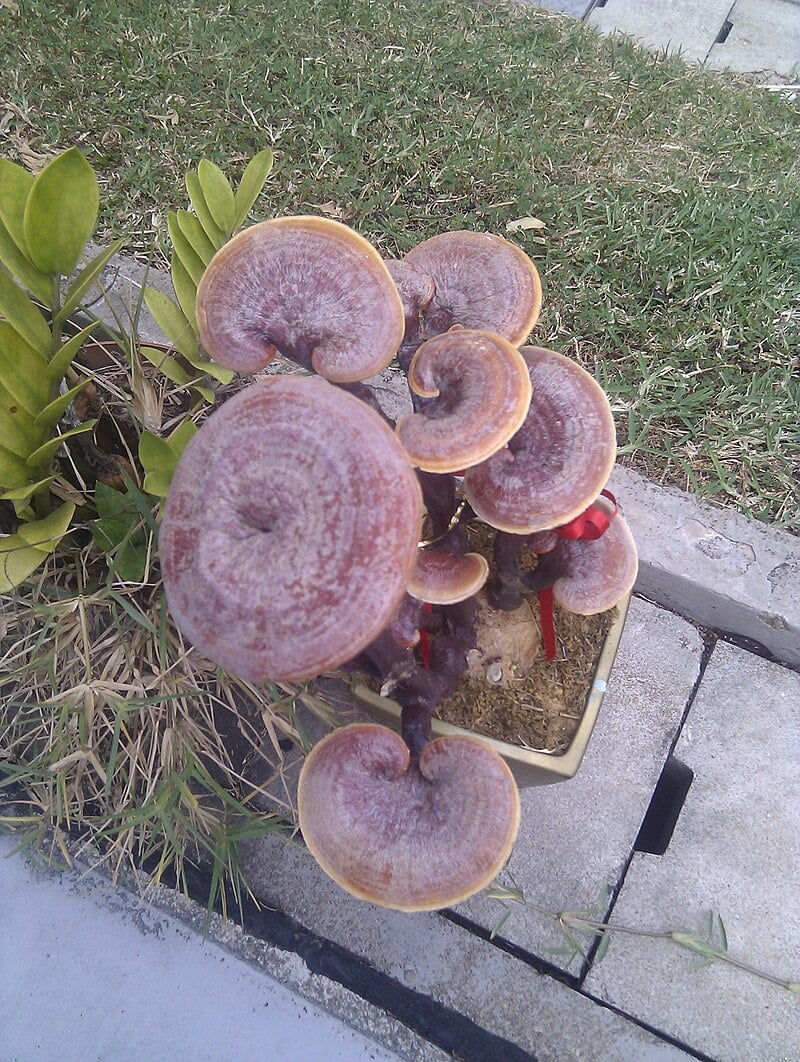
For over two millennia, Reishi (Ganoderma lucidum) — called Lingzhi in Chinese medicine — was reserved for emperors and nobles. Known as the "mushroom of immortality," it was considered too precious for common use. Today, it is among the most studied medicinal mushrooms in the world, and science is both validating and refining its traditional reputation.
At a Glance
- Contains approximately 400 bioactive compounds — one of the most chemically complex medicinal fungi
- Reduces fatigue by 28% vs. placebo in a 132-patient randomized controlled trial
- Strong evidence for immune support, cortisol reduction, and fibromyalgia relief
- Does not reliably improve cardiovascular markers or blood sugar (per Cochrane review)
Bioactive Compounds: A Complex Chemistry
Reishi contains approximately 400 identified bioactive compounds, making it one of the most chemically complex medicinal fungi. The key players:
- Beta-glucans (polysaccharides) — β-1,3 and β-1,6 D-glucans, activating immune cells via dectin-1 receptors
- Triterpenoids (ganoderic acids) — over 150 lanostane-type compounds with direct anti-inflammatory and antitumor properties
- Ganoderic acids A–Z — inhibit tumor invasion and metastasis, modulate liver enzymes
Polysaccharides drive immune effects; triterpenoids drive adaptogenic and anti-inflammatory effects. Different extraction methods yield different compound profiles — not all Reishi products are equivalent.
Clinical Evidence: Immune Modulation
Neurasthenia (Fatigue) RCT (2005)
A randomized, double-blind, placebo-controlled trial of 132 patients with neurasthenia:
- 51.6% of the Ganopoly (polysaccharide extract) group rated "more than minimally improved" vs. 24.6% placebo
- Fatigue reduced by 28.3% (vs. 20.1% placebo)
- Dose: 5,400 mg/day for 8 weeks
Cochrane Review: Cancer and Immune Markers
Cancer patients receiving G. lucidum alongside chemotherapy or radiotherapy showed increased CD3, CD4, and CD8 T-cell counts. Polysaccharides stimulate NK cells and dendritic cells while increasing IL-10 (anti-inflammatory) and reducing IL-1 and TNF-α (pro-inflammatory).
Caveat: Insufficient evidence to recommend Reishi as first-line cancer treatment. It is a complementary agent supporting quality of life and immune markers, not a replacement for standard care.
NSCLC Chemotherapy Study (Phase II RCT)
A phase II, double-blind trial in non-small cell lung cancer patients during chemotherapy (3.36 g/day, 6 weeks) found maintained or improved quality of life scores (FACT-L), better emotional well-being, and reduced fatigue compared to placebo — with few adverse events.
Clinical Evidence: Sleep, Anxiety, and Fibromyalgia
Fibromyalgia RCT (70 Patients)
A randomized controlled trial (6 g/day for 42 days) found:
- Decreased fibromyalgia impact score
- Improved sleep quality
- Improved happiness and global clinical improvement ratings
- Enhanced aerobic endurance and lower-limb flexibility
- No significant changes in blood markers
HPA Axis and Cortisol
A 12-week randomized trial showed significant reductions in cortisol and ACTH levels — demonstrating adaptogenic modulation of the body's primary stress-response system. This is a key mechanism behind Reishi's reputation as a calming, sleep-supportive herb.
What the Evidence Does NOT Support
⚠️ Two areas where early enthusiasm has not held up under rigorous testing:
- Cardiovascular risk factors: A double-blind RCT in 84 patients (Nature Scientific Reports, 2016) found no significant effect on blood glucose, blood pressure, or lipid profile. The Cochrane review confirmed this finding.
- Blood sugar control: High-quality RCT evidence does not support clinically meaningful glucose reduction.
A 2025 GRADE-assessed meta-analysis of 17 RCTs (Jafari et al.) found very-low-quality evidence overall. Reishi is genuinely beneficial in specific areas — not a universal cure.
Jafari et al. Food Sci Nutr. 2025;13:e70423. DOI: 10.1002/fsn3.70423
Dosing Recommendations
| Preparation | Dose | Duration |
|---|---|---|
| Polysaccharide extract | 1,800–5,400 mg/day | 8–12 weeks |
| Spore powder | 3 g/day | 4–8 weeks |
| Whole mushroom powder | 6–12 g/day | Up to 16 weeks |
Buying tip: Extraction method matters. Water extraction preserves polysaccharides (immune effects); alcohol extraction preserves triterpenoids (adaptogenic effects). Dual-extracted products provide both.
Safety Profile
Reishi has a well-established safety record across clinical trials.
Side effects (mild, uncommon):
- Dizziness, dry mouth, nausea, stomach upset
- Rare: liver toxicity with prolonged use of powder preparations — less common with water-based extracts. Consider monitoring liver enzymes with long-term high-dose use.
⚠️ Drug interactions — consult your physician before use if taking: anticoagulants (warfarin), antihypertensive medications, diabetes medications, or immunosuppressants.
Avoid: During pregnancy or breastfeeding, and within 2 weeks of scheduled surgery.
The Bottom Line
Reishi excels as a fatigue-fighter, quality-of-life enhancer, and long-term immune modulator. Its adaptogenic effects on cortisol and sleep quality are well-supported by clinical data. Where it falls short is the cardiovascular and blood sugar claims — these have not held up in high-quality trials. For stress, sleep, immune support, and recovery, Reishi is a well-evidenced choice. For cholesterol and blood pressure, look elsewhere.
This article is for educational purposes only. Consult your healthcare provider before use, particularly if you have a medical condition or take prescription medications.
Key References
- Tang W, et al. J Med Food. 2005;8(1):53–58. DOI: 10.1089/jmf.2005.8.53
- Klupp NL, et al. Sci Rep. 2016. DOI: 10.1038/srep29540
- Cochrane Database Syst Rev. CD007259
- Jafari et al. Food Sci Nutr. 2025;13:e70423. DOI: 10.1002/fsn3.70423
- PMC7450289. Reishi & Privet Formula in NSCLC patients
- NCBI Bookshelf. "Ganoderma lucidum." NBK92757