"We need to be able to measure what's happening in the body and brain during these extraordinary experiences — not just ask people about them afterward." — Robin Carhart-Harris, Director, Neuroscape Psychedelics Division, UCSF
"The plural of anecdote is not data." — Attributed to Raymond Wolfinger (often cited in clinical research contexts)
Introduction: The Measurement Gap
Psychedelic-assisted therapy has produced some of the most striking clinical outcomes in modern psychiatry. Psilocybin for treatment-resistant depression (Carhart-Harris et al., 2016; 2021). MDMA for chronic PTSD (Mitchell et al., 2021). Psilocybin for cancer-related existential distress (Griffiths et al., 2016). Effect sizes that dwarf those of conventional antidepressants.
And yet, there is a gap at the center of this revolution — a measurement gap.
Here is how most psychedelic clinical trials currently capture what happens during an 8-hour dosing session: blood pressure and heart rate checked at intervals. A therapist's observational notes. And then, hours or days later, the participant fills out questionnaires — the Mystical Experience Questionnaire (MEQ-30), the 5-Dimensional Altered States of Consciousness Scale (5D-ASC), the Quick Inventory of Depressive Symptomatology (QIDS) — translating a vast, multi-layered, physiologically intense experience into Likert-scale self-report.
This is a little like studying a hurricane by asking the survivors to rate the wind on a scale of 1 to 5.
What if, instead, we had continuous, objective physiological data — heart rate variability, electrodermal activity, brain electrical patterns, movement, respiration — streaming in real time throughout the entire experience? What if we could correlate the moment of mystical experience with a specific autonomic signature? What if we could detect physiological distress before a participant can verbalize it?
This is the promise of wearable biosensors in psychedelic clinical research. It is also a promise that remains, as of 2026, largely unfulfilled — though the pieces are falling into place.
1. What Psychedelic Trials Currently Measure — and What They Miss
Standard Outcome Measures
Modern psychedelic clinical trials typically employ:
Primary clinical endpoints:
- Depression: MADRS (Montgomery-Asberg Depression Rating Scale), QIDS, HAM-D, BDI
- PTSD: CAPS-5 (Clinician-Administered PTSD Scale)
- Anxiety: STAI, GAD-7
- Quality of life / well-being: various validated instruments
Subjective experience measures (administered post-session):
- MEQ-30 (Mystical Experience Questionnaire): Captures mystical-type experience — unity, transcendence, sacredness, noetic quality (Barrett et al., 2015)
- 5D-ASC (5-Dimensional Altered States of Consciousness): Oceanic boundlessness, anxious ego dissolution, visionary restructuralization, auditory alterations, reduction of vigilance (Dittrich, 1998; Studerus et al., 2010)
- EDI (Ego Dissolution Inventory): Specific measure of ego dissolution intensity (Nour et al., 2016)
- Emotional Breakthrough Inventory (EBI): Captures cathartic emotional processing (Roseman et al., 2019)
Safety monitoring (intermittent):
- Blood pressure (typically every 30-60 minutes)
- Heart rate (intermittent or at set intervals)
- Temperature (occasionally)
- Therapist observation of visible distress, agitation, or adverse events
The Gaps
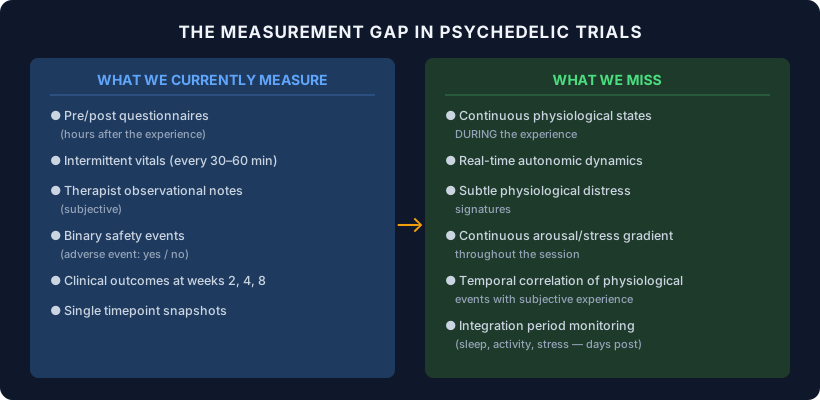
The result: we have excellent data on whether psychedelic-assisted therapy works, but remarkably little data on what is happening physiologically while it works.
2. Wearable Technologies Relevant to Psychedelic Research
Before discussing what wearables could measure in psychedelic trials, it is essential to distinguish between consumer-grade and research-grade devices, and between validated and exploratory measurement modalities.
The Sensor Landscape

A Critical Distinction: Validation Matters
Not all wearable data is created equal. The Empatica E4 (and its successor, the EmbracePlus) is the most widely used research-grade wearable for simultaneous EDA, PPG (photoplethysmography for heart rate/HRV), skin temperature, and accelerometry. It has published validation studies against gold-standard laboratory instruments (Milstein & Gordon, 2020; McCarthy et al., 2016) and is FDA-cleared for seizure detection.
Consumer devices like the Oura Ring and Whoop provide useful HRV and sleep data but have limited validation for clinical trial endpoints. Their PPG-derived HRV measurements are particularly vulnerable to motion artifact — a significant concern during psychedelic sessions where participants may cry, shift position, or move spontaneously.
EEG headbands (Muse, Emotiv) offer 4-16 channels compared to the 64-256 channels of research-grade EEG systems. They can capture broad spectral power trends (alpha, theta, gamma) but are insufficient for source localization, connectivity analysis, or artifact-free measurement during significant movement or emotional arousal. These should be treated as exploratory tools, not validated endpoints.
Principle: In clinical trial design, the measurement instrument must be validated for the context of use. A device validated for resting HRV is not automatically valid for HRV during an MDMA session where a participant is actively processing trauma.
3. Physiological Biomarkers of Psychedelic States
What We Know About the Body During Psychedelic Experiences
Psychedelics produce measurable, reproducible physiological effects — even if most trials have captured them only intermittently. A summary of documented changes across drug classes:

The Entropic Brain Hypothesis and Measurable Correlates
Robin Carhart-Harris and colleagues proposed the Entropic Brain Hypothesis (2014; refined in the REBUS model, Carhart-Harris & Friston, 2019): psychedelics increase the entropy (disorder, information richness) of spontaneous brain activity while decreasing the constraining influence of hierarchical predictive models (particularly in the default mode network).
This is directly measurable. Studies using MEG and high-density EEG have documented:
- Increased Lempel-Ziv complexity (a measure of neural entropy) under psilocybin and LSD (Schartner et al., 2017)
- Decreased alpha power (8-13 Hz) in posterior cortex — the dominant resting rhythm — consistent with reduced constraint on perception (Muthukumaraswamy et al., 2013)
- Increased gamma power (30-100 Hz) during peak experiences, potentially correlating with heightened perceptual binding
- Decreased default mode network coherence, measurable through functional connectivity analysis
The critical question for wearable research: can consumer or research-grade portable EEG headbands capture these signatures with sufficient fidelity? Current evidence suggests they can detect broad spectral power changes (alpha suppression, theta enhancement) but not the fine-grained connectivity patterns that require high-density laboratory EEG.
Heart Rate Variability: The Autonomic Window
HRV — the variation in time between successive heartbeats — is one of the most promising wearable biomarkers for psychedelic research because it reflects the dynamic balance between sympathetic ("fight or flight") and parasympathetic ("rest and digest") nervous system activity.
During psychedelic sessions:
- Onset and peak phases typically show reduced HRV (sympathetic dominance, consistent with arousal, novelty, and potential anxiety)
- Resolution phases in therapeutically successful sessions may show HRV increases above baseline — potentially reflecting a "parasympathetic rebound" associated with emotional processing and integration
- The transition from low to high HRV may correlate with the subjective experience of "emotional breakthrough" (Roseman et al., 2019) or "mystical experience" — though this correlation remains speculative and has not been established in controlled wearable studies
The clinical potential: continuous HRV monitoring could provide a real-time proxy for autonomic state that complements therapist observation — particularly during periods when the participant is silent or inward-focused.
4. Current Research: What Exists and What's Coming
The Honest Assessment
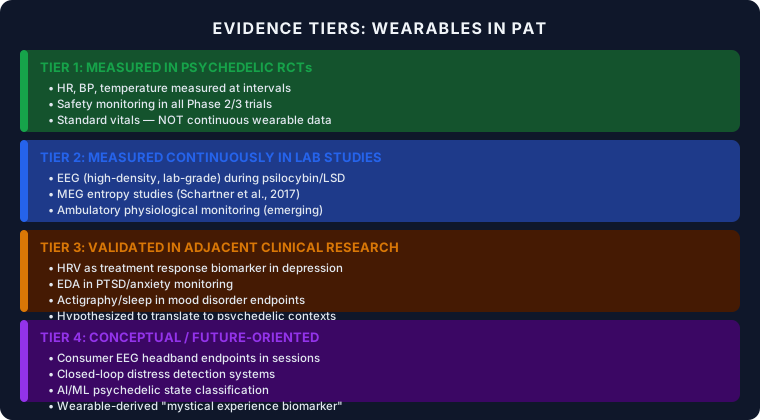
As of 2026, the number of published, peer-reviewed studies that use continuous wearable biosensor monitoring as a primary or secondary endpoint in psychedelic clinical trials is small. This must be stated clearly. The field is at the junction of two rapidly evolving domains — psychedelic medicine and digital health — and the integration is just beginning.
What we can document:
Published and Ongoing Work
Directly relevant (wearables in psychedelic contexts):
- Ancora Biomedical has registered a trial (NCT05443342) investigating psilocybin for Bipolar II depression that explicitly includes wearable data collection as part of its endpoint strategy — one of the first psychedelic RCTs to do so.
- Several early-stage academic studies (unpublished or in preparation as of 2026) at institutions including Imperial College London, University of Zurich, and Maastricht University have incorporated Empatica E4 monitoring during psilocybin and MDMA sessions.
Physiological data collected in flagship trials (intermittent, not continuous wearable):
- MAPS/Lykos MDMA trials (NCT03537014; Phase 3, published as Mitchell et al., 2021 in Nature Medicine): Collected vital signs (HR, BP, temperature) at regular intervals throughout dosing sessions. No continuous wearable data.
- Usona Institute psilocybin trial (NCT03866174): Standard safety vital sign monitoring. No published continuous wearable data.
- Imperial College London psilocybin for depression (Carhart-Harris et al., 2016, Lancet Psychiatry): Included EEG and fMRI pre/post, but not continuous wearable monitoring during dosing sessions.
- Johns Hopkins psilocybin studies (Griffiths et al., 2006, 2016): Physiological safety monitoring; no continuous wearable streams published.
Adjacent digital health research informing the field:
- Empatica E4/EmbracePlus validation studies: Establishing EDA and PPG measurement quality for ambulatory monitoring in clinical populations (Milstein & Gordon, 2020; Pietilä et al., 2017)
- HRV in anxiety/depression treatment monitoring: Established literature on HRV as a biomarker of treatment response in mood and anxiety disorders (Kemp et al., 2010; Koch et al., 2019)
- Actigraphy in mood disorder trials: Sleep and activity monitoring via wearable actigraphy validated as secondary endpoint in depression RCTs (Merikangas et al., 2019)
- FDA Digital Health Technologies (DHT) guidance: Regulatory framework for using digital health technologies for remote data acquisition in clinical investigations (FDA, 2021; updated guidance 2023)
Key Researchers and Institutions
| Researcher / Group | Institution | Relevance |
|---|---|---|
| Robin Carhart-Harris | UCSF (formerly Imperial) | Entropic brain hypothesis; EEG/fMRI studies; REBUS model |
| David Nutt | Imperial College London | Drug policy, neuropharmacology, psychedelic physiology |
| Matthias Liechti | University of Basel | MDMA/LSD acute physiological effects; dose-response |
| Franz Vollenweider | University of Zurich | Psilocybin/LSD neuropharmacology; 5D-ASC development |
| Roland Griffiths (d. 2023) | Johns Hopkins | Foundational psilocybin work; MEQ-30 validation |
| Matthew Johnson | Johns Hopkins | Psilocybin for addiction; safety monitoring |
| Jennifer Mitchell | UCSF | MDMA PTSD trial (lead author Mitchell et al., 2021) |
| Rosalind Watts | Imperial / synthesis | Psilocybin for depression; patient experience research |
| Ancora Biomedical | — | Psilocybin + wearable data trial (NCT05443342) |
5. Mapping Sensors to Session Phases
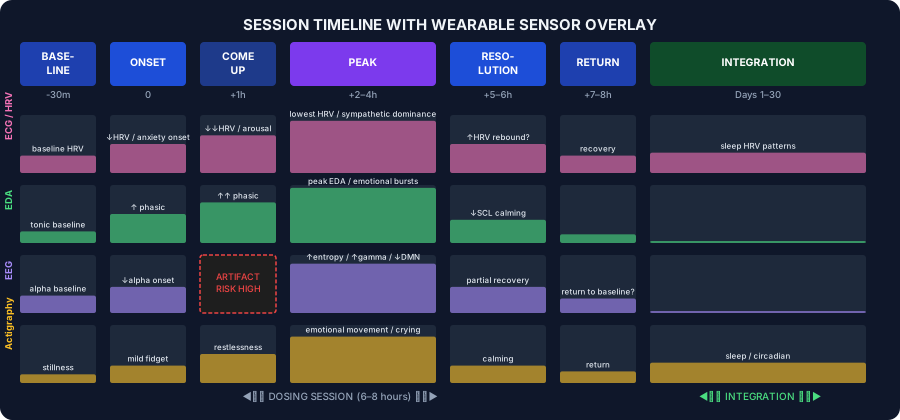
One of the most clinically useful contributions of wearable monitoring would be to create a physiological map of the psychedelic session — identifying which biosignals are informative at each phase. This requires understanding that a psychedelic dosing session is not a uniform state but a dynamic sequence.
The Artifact Problem
This timeline reveals a fundamental challenge: the moments of greatest clinical interest — peak experience, emotional breakthroughs, ego dissolution — are also the moments of greatest measurement artifact. During intense emotional processing, participants cry, shift position, grip surfaces, tremble, breathe irregularly. Each of these movements degrades PPG-derived HRV accuracy, creates motion artifact in EDA signals, and can render EEG data unusable from consumer-grade headbands.
This is not an insurmountable problem, but it demands:
- Sensor placement optimization (wrist-based EDA is more artifact-prone than finger-based; chest-strap ECG is more robust than wrist PPG)
- Multi-modal fusion (when one signal is unreliable, others may compensate)
- Artifact detection and documentation (reporting what data is missing, not just what is present)
- Realistic expectations about what continuous monitoring can deliver in a 6-8 hour session involving intense emotional and physical states
6. Integrating Objective and Subjective Data
The Triangulation Opportunity
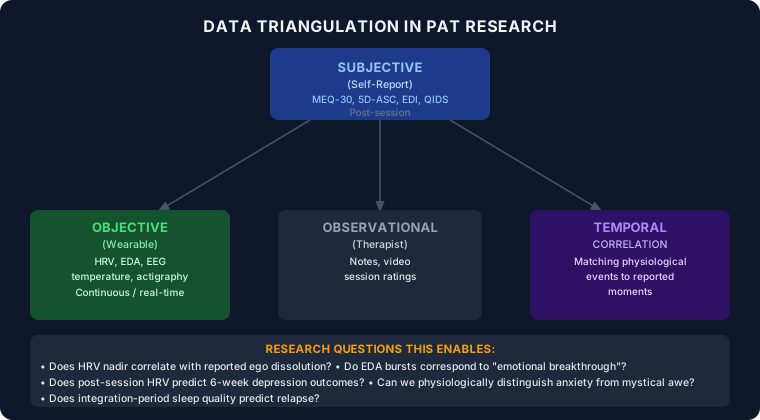
The most compelling scientific use of wearables in psychedelic research is not replacing subjective measures but triangulating them — creating a multi-modal picture that is richer than any single data stream alone.
Specific Triangulation Hypotheses
Several testable hypotheses emerge from existing knowledge:
1. HRV recovery and therapeutic outcome: If parasympathetic rebound (HRV increase above baseline) during the resolution phase correlates with emotional breakthrough scores (EBI) and predicts depression improvement at 6 weeks, HRV recovery could serve as an objective indicator of "therapeutic processing." This hypothesis draws on established HRV-treatment response literature in depression (Kemp et al., 2010).
2. EDA and emotional breakthrough: Electrodermal activity peaks (skin conductance responses) during the peak phase may correlate with self-reported intensity of emotional processing. If specific EDA signatures distinguish therapeutic emotional engagement from anxious distress, real-time monitoring could inform clinical decision-making.
3. Sleep architecture and integration: Post-session sleep quality — measured via actigraphy and HRV-derived sleep staging — may predict durability of therapeutic gains. Disrupted sleep in the days following a psychedelic session could signal inadequate integration or emerging adverse effects.
4. Brain entropy and mystical experience: If portable EEG can reliably measure increased Lempel-Ziv complexity during peak psychedelic states, and if this correlates with MEQ-30 scores, neural entropy could become an objective biomarker of the neurological substrate of mystical experience. This is currently speculative — portable EEG may lack the fidelity required.
What Wearable Data Cannot Replace
A word of caution: physiological data tracks arousal, autonomic state, and neural activity patterns. It does not — and likely cannot — directly measure the meaning of an experience. High sympathetic arousal during a psychedelic session could reflect:
- Terror (clinically concerning)
- Profound awe (therapeutically valuable)
- Physical discomfort (nausea, temperature dysregulation)
- Intense grief processing (potentially therapeutic)
The subjective report remains irreplaceable for distinguishing between these. The value of wearable data is in providing the physiological context for that report, not in supplanting it.
7. The Measurement Stack: From Raw Signal to Clinical Insight
For readers involved in trial design, a conceptual model of the data processing pipeline:

8. Challenges and Ethical Considerations
8.1 Signal Validity in Psychedelic Contexts
The fundamental technical challenge: wearable biosensors are typically validated in relatively controlled conditions — resting, ambulatory walking, sleep. Psychedelic sessions involve:
- Intense emotional expression (crying, trembling, vocalizing) — degrades all motion-sensitive sensors
- Unpredictable posture changes — supine to seated to fetal position — affects PPG, EDA electrode contact, EEG impedance
- Extended session duration (6-8 hours) — electrode gel dries, adhesive loosens, skin irritation develops, battery life may be insufficient
- Environmental confounders — music (a standard element of psychedelic therapy protocols) independently affects HRV and EDA; therapist touch affects skin conductance; room temperature fluctuations affect peripheral temperature sensors
The implication: any wearable endpoint in a psychedelic trial must account for substantial data missingness and artifact contamination. Signal quality indices should be reported alongside physiological findings. Effect sizes should be interpreted with these limitations in mind.
8.2 Ethical Dimensions
Continuous physiological monitoring during psychedelic-assisted therapy raises specific ethical concerns that go beyond standard clinical trial monitoring:
Consent and capacity: Participants consent to monitoring before a session, but during the session their capacity for autonomous decision-making is altered. Can they meaningfully withdraw consent from monitoring mid-session? Protocols should include clear provisions for participant-initiated monitoring pauses or removal.
Surveillance and vulnerability: Being continuously monitored during an experience that involves ego dissolution, emotional vulnerability, and potential loss of bodily self-awareness creates a dynamic that some participants may experience as surveillance. The therapeutic frame emphasizes safety and trust; pervasive monitoring could undermine it.
Data privacy: Physiological data collected during a psychedelic session is extraordinarily sensitive — it may reveal trauma responses, emotional states, and neurological patterns that participants did not anticipate sharing. GDPR and HIPAA compliance is the floor, not the ceiling. Data minimization principles should be rigorously applied: collect only what is scientifically justified, retain only what is necessary, and destroy what is not.
The medicalization concern: There is a legitimate philosophical question about whether the richness of a mystical or ego-dissolving experience should be reduced to a set of physiological time series. Some researchers and clinicians argue that the subjective, meaning-laden dimension of psychedelic experience is its therapeutic core, and that excessive physiological monitoring risks reducing profound personal transformation to a set of biomarker curves.
The counterargument: objective measurement does not negate subjective meaning — it contextualizes it. The two are complementary, not competing. But the concern deserves honest engagement, not dismissal.

8.3 Regulatory Considerations
The FDA's guidance on Digital Health Technologies for Remote Data Acquisition in Clinical Investigations (2021, updated 2023) provides a framework for incorporating wearable endpoints in clinical trials. Key principles relevant to psychedelic research:
- DHTs used as endpoints must demonstrate verification (the sensor measures what it claims to) and validation (the measurement is clinically meaningful in the target population)
- Fit-for-purpose evaluation: a device validated for sleep staging is not automatically valid for real-time arousal monitoring during a psychedelic session
- Data integrity: continuous data streams must be stored, transmitted, and analyzed with documented quality controls
- Participant burden: monitoring should not interfere with the therapeutic process
9. Future Directions
9.1 Closed-Loop Safety Monitoring (Experimental)
The most immediately valuable application of wearable technology in psychedelic-assisted therapy may not be scientific measurement but real-time safety monitoring:
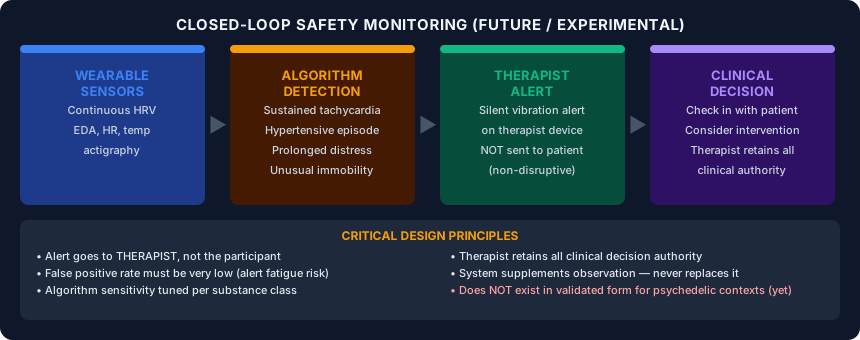
This system does not exist in validated form for psychedelic contexts. But the components — wearable sensors, real-time data streaming, anomaly detection algorithms — are well-established in other domains (epilepsy monitoring, cardiac arrhythmia detection). The adaptation to psychedelic safety monitoring is a tractable engineering and clinical validation problem.
9.2 Digital Phenotyping for Integration Monitoring
The integration period — days to weeks after a psychedelic session — is increasingly recognized as critical for therapeutic outcomes. Disrupted integration is associated with adverse psychological outcomes, while effective integration correlates with sustained improvement (Watts et al., 2017).
Wearables worn during the integration period could passively monitor:
- Sleep architecture (total sleep time, wake after sleep onset, HRV-derived sleep staging)
- Activity patterns (daily step counts, sedentary time, circadian regularity)
- Autonomic tone (resting HRV trends over days/weeks)
- Stress reactivity (EDA responses to daily stressors)
These data, collected passively without participant burden, could serve as early warning indicators for integration difficulty — prompting a clinician check-in before a participant experiences a crisis.
9.3 Multi-Modal Biosensor Fusion
Individual wearable signals are noisy and ambiguous. The future lies in multi-modal fusion — combining HRV + EDA + actigraphy + temperature (and potentially portable EEG) into composite indices that are more robust than any single measure.
Machine learning approaches — particularly those that have proven effective in adjacent fields like stress detection and emotion recognition (Picard et al., 2001; Healey & Picard, 2005; Greco et al., 2016) — could be trained on multi-modal wearable data from psychedelic sessions to identify:
- Physiological state classifications (calm, anxious arousal, emotional processing, dissociation)
- Transition signatures (onset, peak, resolution)
- Distress vs. engagement patterns
This is speculative but scientifically grounded: the underlying signal processing and machine learning methods are mature. What is needed is the labeled psychedelic session data to train and validate the models.
9.4 Research Priorities
Based on the current state of the field, the following research priorities would most efficiently advance the integration of wearables and psychedelic clinical science:
Feasibility and acceptability studies: Before endpoint validation, document whether participants and therapists find wearable monitoring acceptable, how much data is lost to artifact, and what participant burden is reported.
Signal validation in psychedelic contexts: Establish whether Empatica E4/EmbracePlus EDA and PPG-HRV remain valid during the specific movement and emotional conditions of psychedelic sessions. This requires comparison with gold-standard laboratory instruments during actual dosing sessions.
Correlational studies: In existing or planned psychedelic trials, add continuous wearable monitoring as an exploratory endpoint and correlate physiological time series with established subjective measures (MEQ-30, 5D-ASC, EBI) and clinical outcomes.
Integration period monitoring: Deploy wearable actigraphy + HRV monitoring during the 2-4 weeks post-session and correlate with integration quality assessments and clinical outcomes at later follow-up.
Multi-site data pooling: Given small sample sizes in individual psychedelic trials, multi-site collaboration on wearable data collection (with standardized devices and protocols) would accelerate progress toward sufficiently powered analyses.
Conclusion: Measurement Without Reduction
Wearable biosensors offer psychedelic clinical research something it has lacked: a continuous, objective window into the physiology of some of the most therapeutically potent experiences in psychiatry. The potential is real — for safety monitoring, mechanistic insight, outcome prediction, and integration support.
But the field must resist two temptations:
The first temptation is hype. Wearable data in psychedelic trials is nascent. The published evidence base specifically validating continuous wearable endpoints in psychedelic RCTs is thin. Signal quality during emotionally intense sessions is a genuine, unsolved challenge. Consumer EEG headbands are not research-grade instruments. Saying "we can measure mystical experience with a wrist sensor" would be irresponsible.
The second temptation is reduction. The therapeutic power of psychedelic-assisted therapy appears to arise from an interaction between neurochemistry, psychological process, relational context, and personal meaning. A heart rate variability curve, however precisely measured, does not capture the moment a participant forgives their father or encounters their own mortality with acceptance. The wearable data provides the physiological accompaniment to these experiences — the autonomic signature of transformation — not the transformation itself.
Between these two temptations lies the real work: careful, validated, ethically rigorous integration of wearable biosensor technology into psychedelic clinical research. The tools are ready. The science is almost ready. The question is whether the field will build the bridge with the care and intellectual honesty the participants — and the experiences — deserve.
Key Researchers and Resources
| Name / Organization | Contribution | Key Work |
|---|---|---|
| Robin Carhart-Harris | Entropic brain, REBUS model, EEG studies | Carhart-Harris et al. (2014, 2019) |
| David Nutt | Psychedelic neuropharmacology | Nutt et al. (2020) |
| Matthias Liechti | MDMA/LSD acute physiological profiles | Schmid et al. (2015); Liechti, 2017) |
| Franz Vollenweider | 5D-ASC, psilocybin neuropharmacology | Vollenweider & Preller (2020) |
| Roland Griffiths (d. 2023) | MEQ-30, foundational psilocybin work | Griffiths et al. (2006, 2016) |
| Jennifer Mitchell | MDMA PTSD Phase 3 lead author | Mitchell et al. (2021) |
| Rosalind Picard | Affective computing, EDA pioneer | Picard et al. (2001); Greco et al. (2016) |
| Empatica | Research-grade wearable (E4, EmbracePlus) | FDA-cleared; validation studies |
| Ancora Biomedical | Psilocybin + wearable data trial | NCT05443342 |
| MAPS / Lykos | MDMA PTSD Phase 3 trials | NCT03537014; Mitchell et al. (2021) |
| Usona Institute | Psilocybin for MDD Phase 2 | NCT03866174 |
| FDA | DHT guidance for clinical trials | FDA (2021, 2023) |
References
Barrett, F. S., Johnson, M. W., & Griffiths, R. R. (2015). Validation of the revised Mystical Experience Questionnaire in experimental sessions with psilocybin. Journal of Psychopharmacology, 29(11), 1182–1190.
Carhart-Harris, R. L., Erritzoe, D., Williams, T., Stone, J. M., Reed, L. J., Colasanti, A., ... & Nutt, D. J. (2012). Neural correlates of the psychedelic state as determined by fMRI studies with psilocybin. Proceedings of the National Academy of Sciences, 109(6), 2138–2143.
Carhart-Harris, R. L., Leech, R., Hellyer, P. J., Shanahan, M., Feilding, A., Tagliazucchi, E., ... & Nutt, D. J. (2014). The entropic brain: A theory of conscious states informed by neuroimaging research with psychedelic drugs. Frontiers in Human Neuroscience, 8, 20.
Carhart-Harris, R. L., Bolstridge, M., Rucker, J., Day, C. M., Erritzoe, D., Kaelen, M., ... & Nutt, D. J. (2016). Psilocybin with psychological support for treatment-resistant depression: An open-label feasibility study. The Lancet Psychiatry, 3(7), 619–627.
Carhart-Harris, R. L., & Friston, K. J. (2019). REBUS and the anarchic brain: Toward a unified model of the brain action of psychedelics. Pharmacological Reviews, 71(3), 316–344.
Carhart-Harris, R., Giribaldi, B., Watts, R., Baker-Jones, M., Murphy-Beiner, A., Murphy, R., ... & Nutt, D. J. (2021). Trial of psilocybin versus escitalopram for depression. New England Journal of Medicine, 384(15), 1402–1411.
Dittrich, A. (1998). The standardized psychometric assessment of altered states of consciousness (ASCs) in humans. Pharmacopsychiatry, 31(S2), 80–84.
FDA. (2021). Digital health technologies for remote data acquisition in clinical investigations: Guidance for industry, investigators, and other stakeholders. U.S. Food and Drug Administration.
Greco, A., Valenza, G., Lanata, A., Scilingo, E. P., & Citi, L. (2016). cvxEDA: A convex optimization approach to electrodermal activity processing. IEEE Transactions on Biomedical Engineering, 63(4), 797–804.
Griffiths, R. R., Richards, W. A., McCann, U., & Jesse, R. (2006). Psilocybin can occasion mystical-type experiences having substantial and sustained personal meaning and spiritual significance. Psychopharmacology, 187(3), 268–283.
Griffiths, R. R., Johnson, M. W., Carducci, M. A., Umbricht, A., Richards, W. A., Richards, B. D., ... & Klinedinst, M. A. (2016). Psilocybin produces substantial and sustained decreases in depression and anxiety in patients with life-threatening cancer. Journal of Psychopharmacology, 30(12), 1181–1197.
Healey, J. A., & Picard, R. W. (2005). Detecting stress during real-world driving tasks using physiological sensors. IEEE Transactions on Intelligent Transportation Systems, 6(2), 156–166.
Kemp, A. H., Quintana, D. S., Gray, M. A., Felmingham, K. L., Brown, K., & Gatt, J. M. (2010). Impact of depression and antidepressant treatment on heart rate variability: A review and meta-analysis. Biological Psychiatry, 67(11), 1067–1074.
Koch, C., Wilhelm, M., Salzmann, S., Rief, W., & Euteneuer, F. (2019). A meta-analysis of heart rate variability in major depression. Psychological Medicine, 49(12), 1948–1957.
Liechti, M. E. (2017). Modern clinical research on LSD. Neuropsychopharmacology, 42(11), 2114–2127.
McCarthy, C., Pradhan, N., Redpath, C., & Adler, A. (2016). Validation of the Empatica E4 wristband. In IEEE EMBS International Student Conference (ISC).
Merikangas, K. R., Swendsen, J., Hickie, I. B., Cui, L., Shou, H., Merikangas, A. K., ... & Zipunnikov, V. (2019). Real-time mobile monitoring of the dynamic associations among motor activity, energy, mood, and sleep in adults with bipolar disorder. JAMA Psychiatry, 76(2), 190–198.
Milstein, N., & Gordon, I. (2020). Validating measures of electrodermal activity and heart rate derived from the Empatica E4 utilized in research settings that involve interactive dyadic states. Frontiers in Behavioral Neuroscience, 14, 148.
Mitchell, J. M., Bogenschutz, M., Lilienstein, A., Harrison, C., Kleiman, S., Parker-Guilbert, K., ... & Doblin, R. (2021). MDMA-assisted therapy for severe PTSD: A randomized, double-blind, placebo-controlled phase 3 study. Nature Medicine, 27(6), 1025–1033.
Muthukumaraswamy, S. D., Carhart-Harris, R. L., Moran, R. J., Brookes, M. J., Williams, T. M., Errtizoe, D., ... & Nutt, D. J. (2013). Broadband cortical desynchronization underlies the human psychedelic state. Journal of Neuroscience, 33(38), 15171–15183.
Nour, M. M., Evans, L., Nutt, D., & Carhart-Harris, R. L. (2016). Ego-dissolution and psychedelics: Validation of the ego-dissolution inventory (EDI). Frontiers in Human Neuroscience, 10, 269.
Nutt, D. J., Erritzoe, D., & Carhart-Harris, R. L. (2020). Psychedelic psychiatry's brave new world. Cell, 181(1), 24–28.
Picard, R. W., Vyzas, E., & Healey, J. (2001). Toward machine emotional intelligence: Analysis of affective physiological state. IEEE Transactions on Pattern Analysis and Machine Intelligence, 23(10), 1175–1191.
Pietilä, J., Mehrang, S., Tolonen, J., Karjalainen, J., Mattila, E., & Korhonen, I. (2017). Evaluation of the accuracy and reliability for photoplethysmography based heart rate and beat-to-beat detection during daily activities. In EMBEC & NBC 2017 (pp. 145–148). Springer.
Roseman, L., Haijen, E., Idiber-Dakhlia, K., Kaelen, M., Breinberg, R., Nutt, D. J., & Carhart-Harris, R. L. (2019). Emotional breakthrough and psychedelics: Validation of the emotional breakthrough inventory. Journal of Psychopharmacology, 33(9), 1076–1087.
Schartner, M. M., Carhart-Harris, R. L., Barrett, A. B., Seth, A. K., & Muthukumaraswamy, S. D. (2017). Increased spontaneous MEG signal diversity for psychoactive doses of ketamine, LSD and psilocybin. Scientific Reports, 7, 46421.
Schenberg, E. E., Alexandre, J. F., Filev, R., Cravo, A. M., Sato, J. R., Muthukumaraswamy, S. D., ... & da Silveira, D. X. (2015). Acute biphasic effects of ayahuasca. PLOS ONE, 10(9), e0137202.
Schmid, Y., Enzler, F., Gasser, P., Grouzmann, E., Preller, K. H., Vollenweider, F. X., ... & Liechti, M. E. (2015). Acute effects of lysergic acid diethylamide in healthy subjects. Biological Psychiatry, 78(8), 544–553.
Studerus, E., Gamma, A., & Vollenweider, F. X. (2010). Psychometric evaluation of the altered states of consciousness rating scale (OAV). PLOS ONE, 5(8), e12412.
Vollenweider, F. X., & Preller, K. H. (2020). Psychedelic drugs: Neurobiology and potential for treatment of psychiatric disorders. Nature Reviews Neuroscience, 21(11), 611–624.
Watts, R., Day, C., Krzanowski, J., Nutt, D., & Carhart-Harris, R. (2017). Patients' accounts of increased "connectedness" and "acceptance" after psilocybin for treatment-resistant depression. Journal of Humanistic Psychology, 57(5), 520–564.
This post is intended for researchers, clinicians, digital health professionals, and informed readers interested in the intersection of wearable biosensor technology and psychedelic-assisted therapy. It does not constitute clinical or regulatory advice. The field is evolving rapidly; readers are encouraged to consult primary sources, ClinicalTrials.gov registrations, and updated FDA guidance.
Evidence classifications reflect the author's synthesis of available literature and are offered as a practical framework, not formal systematic review findings.