
A guide for mental health professionals and informed readers exploring ACT as a framework for psychedelic-assisted therapy.
"If you do ACT properly, you're not teaching people to feel better. You're teaching people to get better at feeling." — Steven C. Hayes, PhD, founder of Acceptance and Commitment Therapy
Introduction: The Problem of the Open Window
Something remarkable happens during a well-supported psychedelic experience. The rigid mental architecture that normally filters, categorizes, and suppresses your inner life temporarily loosens. Old stories about who you are and what you deserve soften. The emotional material that ordinary life keeps at a careful distance — grief, longing, shame, wonder — becomes accessible. People emerge from psilocybin or MDMA sessions reporting clarity about their values, relief from lifelong depression, and a felt sense of connection they had forgotten was possible.
And then Monday arrives.
The windows that opened during the session begin to close. The old patterns — avoidance, self-criticism, habitual narrowing — gradually reassert themselves. The insight was real. The change, without skillful support, may not persist.
This is where Acceptance and Commitment Therapy (ACT) enters the picture. Developed by psychologist Steven C. Hayes and colleagues over four decades of research, ACT does not concern itself primarily with symptom relief. Its target is something more fundamental: psychological flexibility — the capacity to be fully present with difficult inner experience and to act, consistently and persistently, in the direction of what matters most to you.
As a framework for psychedelic-assisted therapy (PAT), ACT offers three things the field urgently needs: a coherent mechanism that bridges neurological and behavioral change, a structured scaffold for preparation and integration, and a clear answer to the question every psychedelic participant eventually faces — now what?
Note: Psychedelic-assisted therapy remains restricted or illegal in many jurisdictions. This post is for educational purposes only and does not constitute medical or clinical advice. All psychedelic therapy should occur under appropriate legal and clinical supervision.
Part I: What is Acceptance and Commitment Therapy?
ACT (pronounced as one word, not three initials) belongs to the "third wave" of cognitive-behavioral therapies — a movement that shifted focus from directly changing the content of thoughts to changing one's relationship to thoughts, feelings, and sensations. It was developed by Steven C. Hayes at the University of Nevada, Reno, beginning in the 1980s, formalized in the foundational text Acceptance and Commitment Therapy (Hayes, Strosahl, & Wilson, 1999/2012), and has since accumulated one of the largest evidence bases in clinical psychology.
The Central Target: Psychological Flexibility
ACT's primary goal is not the reduction of anxiety, or depression, or trauma symptoms — though these often follow. The goal is psychological flexibility: the ability, in Hayes's words, to "contact the present moment more fully as a conscious human being, and to change or persist in behavior when doing so serves valued ends." (Hayes, Luoma, Bond, Masuda, & Lillis, 2006)
Psychological inflexibility — the opposite — is characterized by rigid attempts to control, suppress, or escape internal experience; fusion with unhelpful thought patterns; narrow behavioral repertoires driven by avoidance rather than values. ACT theory holds that inflexibility underlies the majority of human psychological suffering regardless of diagnostic category.
The Hexaflex: Six Processes, One Goal
The Hexaflex is ACT's model of psychological flexibility, representing six interacting core processes that together generate the capacity to live fully and act purposefully even in the presence of difficult inner experience.
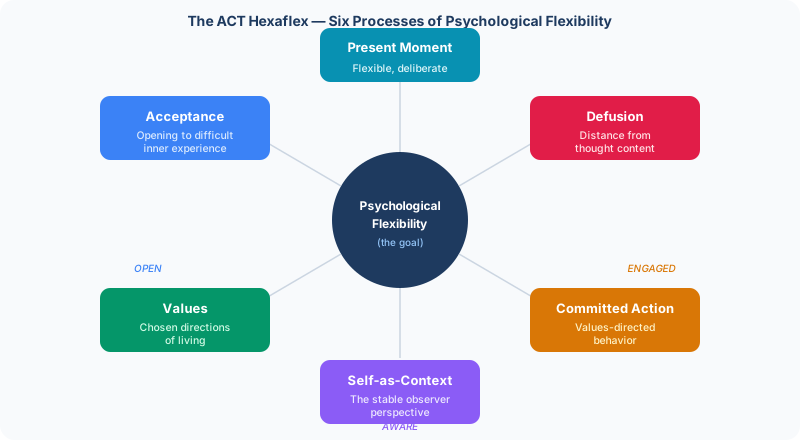
A cleaner representation of the six processes as an interconnected system:
The six processes in brief:
- Acceptance (Willingness): Opening to difficult inner experience — pain, fear, grief, uncertainty — without fighting it, suppressing it, or letting it dictate behavior. Acceptance is not resignation; it is making room.
- Defusion (Cognitive Defusion): Creating distance from the content of thoughts. Instead of being dominated by "I am worthless," defusion allows you to notice: "I'm having the thought that I'm worthless." The thought remains; its grip loosens.
- Contact with the Present Moment: Flexible, deliberate attention to the now — not as a meditative state, but as a practical skill for living in the actual circumstances of your life.
- Self-as-Context: The "observer self" — the continuous, stable perspective from which experience is witnessed. Distinct from the self-as-story ("I am a depressed person") and the self-as-content (the thoughts and feelings themselves).
- Values: Chosen directions of living — not goals to be achieved, but ongoing qualities of action. What do you want to stand for? What truly matters to you?
- Committed Action: Purposeful behavior in the direction of values, especially in the presence of the obstacles, discomfort, and barriers that will inevitably arise.
The ACT Matrix: A Practical Map
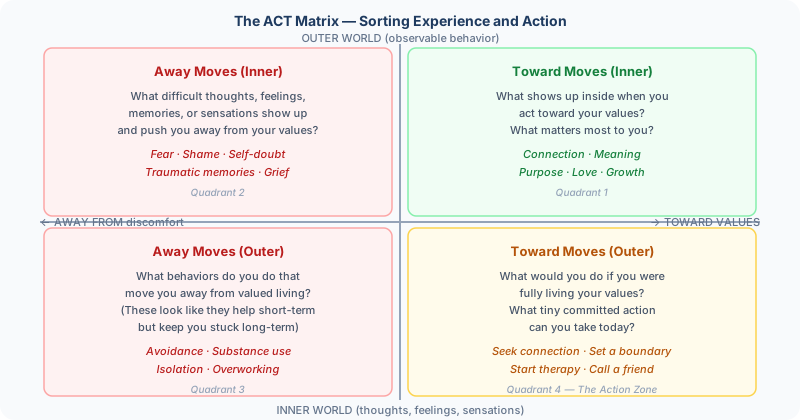
Alongside the Hexaflex, ACT practitioners often use the ACT Matrix — a simple two-axis framework developed by Kevin Polk and Jerold Hambright — to help clients sort their experience and plan valued action.
THE ACT MATRIX
                          |
         INNER WORLD      |      OUTER WORLD
    (thoughts, feelings,  |   (behaviors, actions,
     memories, sensations)|    what others observe)
                          |
    _____________________ | _____________________
                          |
  AWAY FROM DISCOMFORT    |    TOWARD VALUES
  (experiential avoidance)|  (values-based action)
                          |
  What shows up inside    |  What do you do that
  that your mind uses     |  moves you away from
  to push you away from   |  valued living?
  discomfort?             |
  _____________________ | _____________________
                          |
  What shows up inside    |  What would you do if
  when you act toward     |  you were fully living
  your values?            |  your values?
                          |
In practice, the matrix helps clients see the difference between "away moves" (behavior driven by avoidance of discomfort) and "toward moves" (behavior driven by values). This simple distinction becomes one of ACT's most powerful integration tools.
Key references:
- Hayes, S.C., Strosahl, K.D., & Wilson, K.G. (2012). Acceptance and Commitment Therapy: The Process and Practice of Mindful Change (2nd ed.). Guilford Press.
- Hayes, S.C., Luoma, J.B., Bond, F.W., Masuda, A., & Lillis, J. (2006). Acceptance and commitment therapy: Model, processes and outcomes. Behaviour Research and Therapy, 44(1), 1–25.
- A-Tjak, J.G.L., et al. (2015). A meta-analysis of the efficacy of acceptance and commitment therapy for clinically relevant mental and physical health problems. Psychotherapy and Psychosomatics, 84(1), 30–36.
- Gloster, A.T., et al. (2020). The empirical status of acceptance and commitment therapy: A review of meta-analyses. Journal of Contextual Behavioral Science, 18, 181–192.
The evidence base for ACT is extensive. Meta-analyses confirm its effectiveness across anxiety, depression, chronic pain, OCD, addiction, and numerous other presentations. In contexts overlapping with psychedelic therapy — trauma, substance use, existential distress — ACT is particularly well-supported.
Part II: The Psychedelic Research Landscape (Brief)
The past two decades have produced a remarkable body of clinical evidence for psychedelic-assisted therapy. A brief orientation for context:
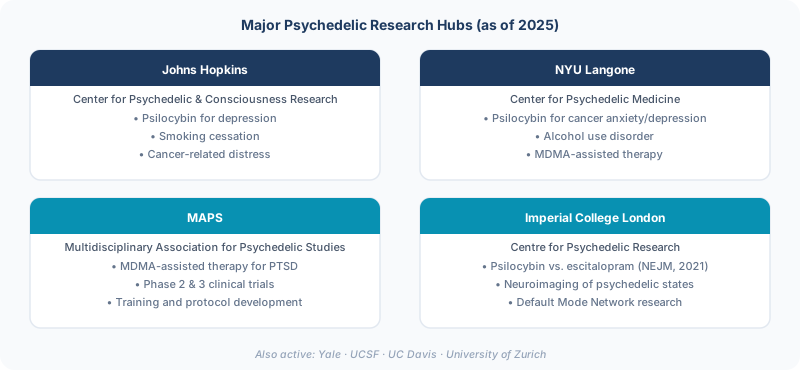
Landmark studies establishing the efficacy of PAT include:
- Davis et al. (2021) — psilocybin for major depressive disorder (JAMA Psychiatry)
- Mitchell et al. (2021) — MDMA-assisted therapy for severe PTSD (Nature Medicine)
- Carhart-Harris et al. (2021) — psilocybin vs. escitalopram for depression (NEJM)
- Griffiths et al. (2016) and Ross et al. (2016) — psilocybin for cancer-related anxiety and depression (Journal of Psychopharmacology)
- Johnson et al. (2014) — psilocybin-assisted smoking cessation (Journal of Psychopharmacology)
The effect sizes in these trials — particularly for treatment-resistant conditions — are among the largest seen in mental health intervention research. Duration of benefit, measured at 6-12+ month follow-ups, distinguishes PAT from many conventional pharmacological treatments.
What the trials have established is that PAT works. What remains less understood is exactly how — and this is precisely where ACT's mechanism-based approach offers something important.
Part III: How ACT Maps onto the Psychedelic Experience
The synergy between ACT and psychedelic-assisted therapy is not merely structural — it is phenomenological. When people describe what happens during a psychedelic session, they are, with striking regularity, describing the six ACT processes in action.
The Six-Process Mapping
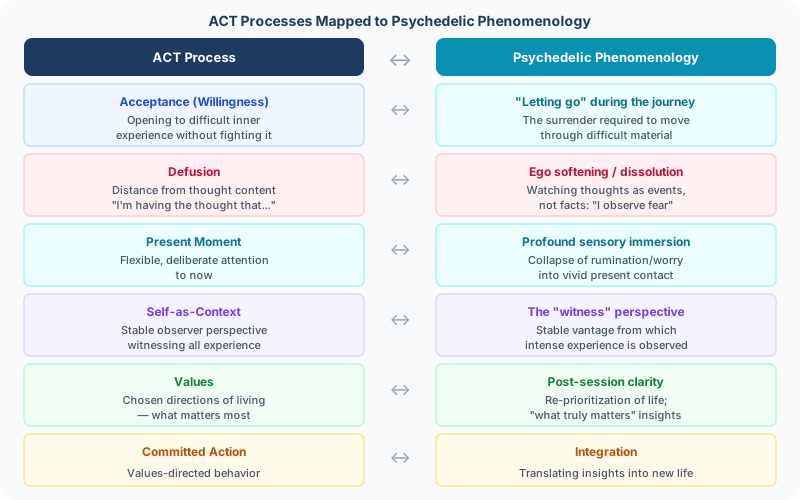
This is not a loose analogy. Researchers studying the phenomenology of psychedelic experiences have identified themes that map directly onto ACT constructs. Watts et al. (2017), analyzing qualitative accounts of psilocybin therapy for treatment-resistant depression, identified acceptance as a central reported mechanism — participants described a shift from disconnection and resistance to a felt willingness to be with their experience. (Journal of Humanistic Psychology)
Roseman, Nutt, and Carhart-Harris (2018) found that the quality of the acute psychedelic experience — particularly dimensions of "oceanic boundlessness" and "dread of ego dissolution" — predicted long-term therapeutic outcomes. The capacity to remain open and present rather than contracting in fear against the experience was a key predictor of benefit. This is precisely what ACT's acceptance and present-moment skills cultivate. (Frontiers in Pharmacology)
The REBUS Model: A Neurological Bridge
In 2019, Robin Carhart-Harris and Karl Friston proposed the REBUS model (Relaxed Beliefs Under Psychedelics) as a neuroscientific account of how psychedelics work. In brief: the brain is a prediction machine that maintains rigid "prior beliefs" — hierarchical models about self and world — that filter incoming information. In depression, anxiety, and trauma, these priors become pathologically rigid. Psychedelics, acting primarily through 5-HT2A receptors, flatten the precision of these priors, allowing bottom-up sensory and emotional information to flow more freely. (Pharmacological Reviews, 2019)
The REBUS model maps onto ACT's framework with remarkable precision:
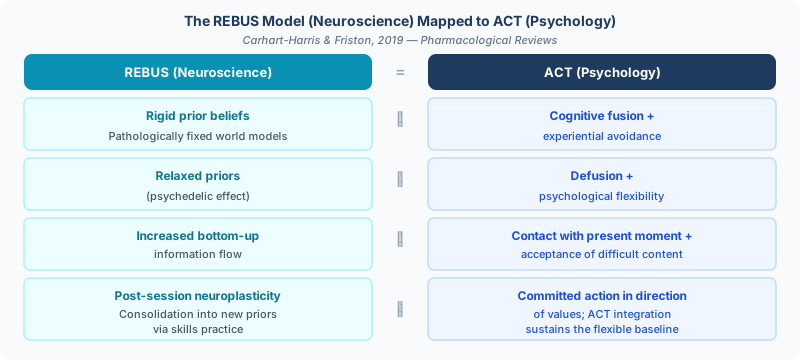
In other words: psychedelics relax the brain's rigid prior beliefs (cognitive fusion in ACT terms), creating a window of heightened psychological flexibility. ACT provides the behavioral and cognitive skills to consolidate and stabilize that flexibility into lasting change.
Part IV: Voices at the Intersection
The explicit integration of ACT with psychedelic-assisted therapy is a relatively recent clinical development, and the field is still building its empirical base. Several figures are defining what this integration looks like.
Steven C. Hayes, PhD — the originator of ACT — has spoken about the resonance between ACT principles and psychedelic phenomenology, noting that the "perspective-taking" and "defusion" skills central to ACT align with what participants in psychedelic trials describe as the observer quality of their experience.
Jason Luoma, PhD and colleagues at Portland Psychotherapy represent the most direct research effort to date at the ACT+psychedelics intersection. Luoma has published on ACT for shame — a construct directly relevant to the exiled, suppressed material that often surfaces in psychedelic sessions — and has been developing theoretical and clinical frameworks for ACT-informed psychedelic integration.
Jonathan Bricker, PhD (Fred Hutchinson Cancer Center) has produced extensive evidence for ACT-based smoking cessation interventions — directly relevant since smoking and other addictions are among the conditions for which psilocybin-assisted therapy shows promising evidence. Bricker's work demonstrates that acceptance-based approaches to addiction outperform willpower-based strategies, which has direct implications for integration work following PAT.
Kelly G. Wilson, PhD — co-developer of ACT with Hayes — has articulated values work in ways that are especially resonant for post-psychedelic integration: the idea that values are not things you achieve but directions you travel, chosen freely even in the presence of suffering.
Ros Watts, PhD (previously Imperial College London) has been one of the most vocal advocates for a relational, acceptance-oriented approach to psychedelic facilitation — her work on "ACE" (Accept, Connect, Embody) in psychedelic therapy creates a bridge between phenomenological research and ACT-consistent clinical practice.
Part V: An ACT-Informed Psychedelic Session
Like all well-structured PAT, an ACT-informed approach organizes itself around three phases. What ACT brings to each phase is distinctive.
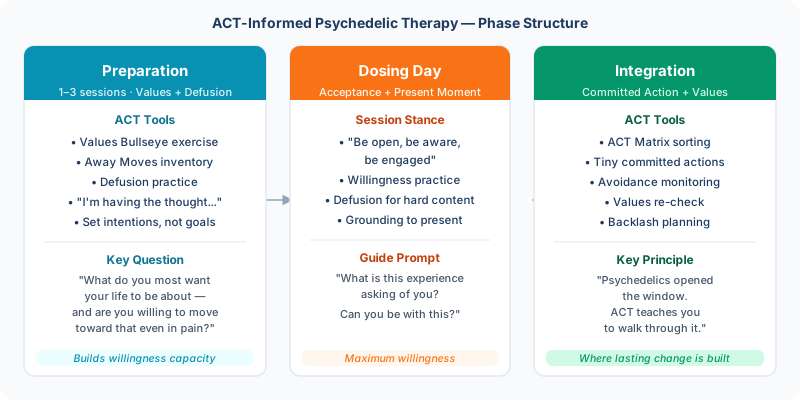
Phase 1: Preparation — Values Clarity and Defusion Practice
The purpose of ACT-informed preparation is not to predict or control the psychedelic experience — that would be the opposite of the willingness the session requires. The purpose is to give the client direction and tools.
Values Bullseye: A structured exercise in which clients identify their most important life domains (relationships, work/education, personal growth, health, community) and locate themselves on a bullseye — how closely are their current actions aligned with what they actually value? The bullseye often reveals the gap the client is carrying into the session: the life they are living versus the life they sense is possible.
Defusion Practice: Clients learn to notice thoughts as thoughts rather than facts or commands. Simple techniques — "I'm having the thought that...," observing thoughts like leaves on a stream, thanking the mind for its commentary — build the cognitive distance that will be essential during the session when thoughts become amplified or strange.
Away Moves Inventory: Clients map their habitual avoidance strategies — the behaviors, substances, patterns that keep them away from difficult inner content. This inventory is not shame-generating; it is illuminating. Understanding your away moves is the first step toward willingness.
Intentions, Not Expectations: ACT-informed preparation sets intentions — open, values-directed orientations — rather than goals or expectations for what will happen. "I want to understand my grief more fully" is an intention. "I will be healed of my depression" is an expectation that can fuel avoidance if the session doesn't deliver it.
Phase 2: The Dosing Day — Willingness, Present Moment, Defusion
During the session itself, ACT's contribution is largely attitudinal rather than technical. The clinician or guide holds a space of maximum willingness — an embodied invitation to the participant to do the same.
The mantra that several PAT programs have adopted — "trust, let go, be open" — is, in ACT terms, a collapsed description of acceptance, defusion, and present-moment contact. Gemini 2.5 Pro's recommended in-session framing: "be open, be aware, be engaged" captures the three broad process clusters (open = acceptance/defusion; aware = present moment/self-as-context; engaged = values/action orientation) in a form that guides can offer without imposing structure on the session.
When a participant encounters difficult content — fear, intense grief, threatening visual imagery — the ACT-consistent response is not to reassure, redirect, or suppress. It is to lean toward:
"What is this experience asking of you? Can you be with this?"
This is fundamentally different from a CBT response (reframe the thought as irrational) or an unstructured approach (wait it out). The ACT guide invites the participant to practice acceptance in the most demanding conditions possible — and thereby builds the willingness capacity that the integration phase will require.
Phase 3: Integration — Committed Action and Values-Based Living
The post-session period is where ACT's behavioral technology becomes most explicit. The ACT Matrix is used to sort the session's material:
- What difficult inner content showed up? (Inner/Away quadrant)
- What values were clarified? (Inner/Toward quadrant)
- What avoidance patterns were recognized? (Outer/Away quadrant)
- What new behaviors would move toward values? (Outer/Toward quadrant)
Integration then becomes a process of planning and taking tiny committed actions in the direction of values — small, specific, achievable behaviors that begin building the life the participant glimpsed during the session. The emphasis on small is important: the post-session period can generate grandiose intentions that collapse under ordinary life friction. ACT is interested in the smallest move toward values that is still meaningful.
Integration also includes planning for avoidance backlash — the return of old escape patterns when the vulnerability of post-session openness meets the demands of daily life. The ACT-informed clinician helps the client predict and prepare for this, treating the return of old away moves not as regression but as a signal to revisit willingness.
Part VI: Psychological Flexibility as the Mechanism of Change
The most compelling theoretical contribution ACT makes to psychedelic science is a proposed mechanism: psychological flexibility as the common final pathway through which both therapies generate lasting change.
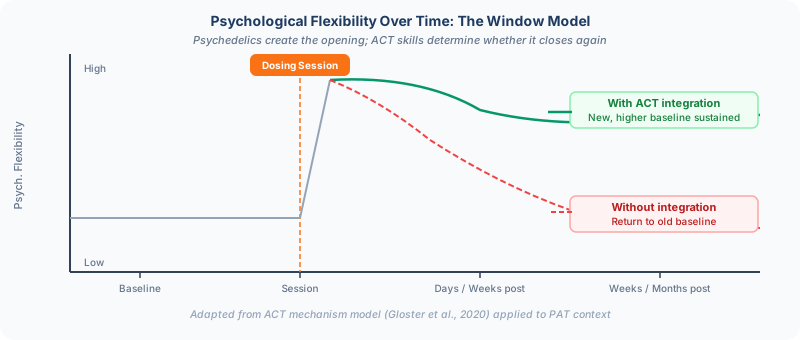
The REBUS model provides the neurological story: psychedelics flatten rigid prior beliefs, creating heightened openness to new information and new ways of being. This is the biological correlate of increased psychological flexibility. But this window is temporary — neural consolidation, the brain's tendency to restore stable priors, works against sustaining the opening unless new behaviors and cognitive patterns are actively practiced.
ACT provides precisely those behaviors and patterns. Research on psychological flexibility as a treatment mechanism (Gloster et al., 2020, Journal of Contextual Behavioral Science) consistently finds it to be a robust mediator of ACT's outcomes across diverse conditions. If psychedelics create the flexibility window, ACT teaches people how to inhabit and expand it.
This framing — psychedelics induce, ACT sustains — is the single most important concept in this post. It transforms psychedelic integration from a passive process of "letting insights settle" into an active, skill-based practice of expanding and consolidating psychological flexibility.
Part VII: ACT vs. Other Therapeutic Frameworks for Psychedelics
ACT is one of several therapeutic frameworks being adapted for psychedelic work. A brief comparison:
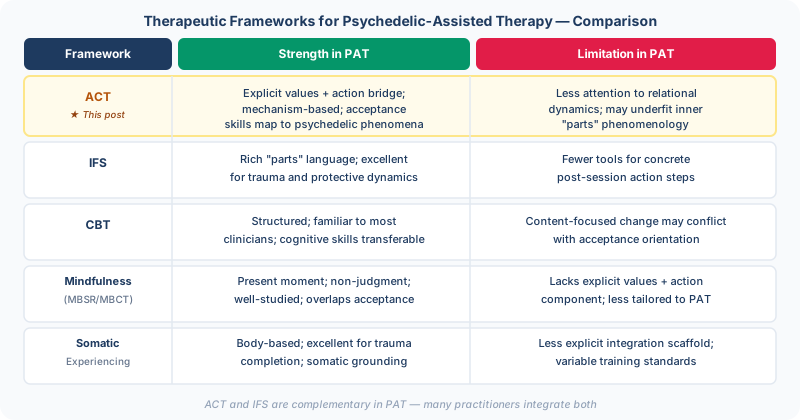
ACT's particular strength lies in the explicit bridge between experience and action — the Values → Committed Action axis that many purely contemplative frameworks leave underdeveloped. For the integration phase, where the challenge is translating insight into a different life, ACT offers the field's most direct tools.
ACT and IFS are not competitors in this context. Many practitioners combine them: IFS language to navigate the inner content of the journey; ACT tools to organize the integration work afterward. A participant might use IFS to understand which part surfaced during the session and what it needs, and ACT to plan what actions that understanding calls for.
Part VIII: The Evidence — What We Know, What We Don't
Intellectual honesty requires careful calibration.
What We Have: Strong Parallel Evidence
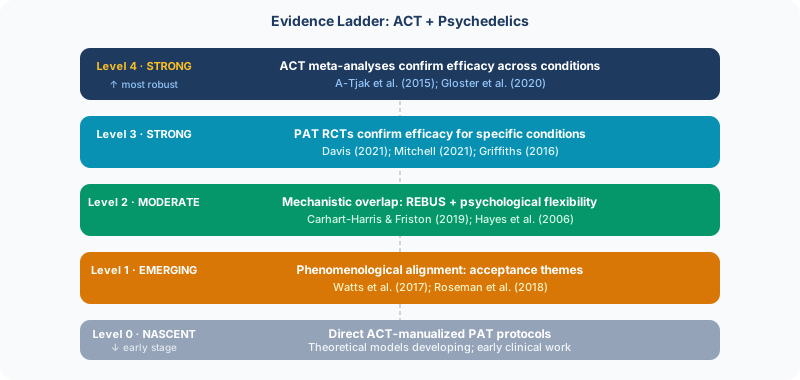
ACT evidence: The evidence base for ACT across clinical conditions is extensive and well-established. A-Tjak et al.'s 2015 meta-analysis of 39 randomized controlled trials confirmed ACT's efficacy across multiple diagnostic categories. Gloster et al.'s 2020 review of meta-analyses affirmed psychological flexibility as a robust and consistent mechanism. ACT is an evidence-based treatment recognized by major clinical bodies.
PAT evidence: The clinical trial evidence for psychedelic-assisted therapy — for psilocybin in depression, MDMA in PTSD, and psilocybin in addiction and cancer-related distress — is compelling by the standards of psychotherapy research. Effect sizes are large; outcomes are durable; patient acceptance is high.
The Evidence Ladder
What We Don't Have (Yet)
There are currently no large-scale RCTs specifically testing ACT-manualized preparation and integration modules against non-ACT comparators in PAT. The integration of ACT into psychedelic therapy is being practiced by a growing community of clinicians, and the theoretical and phenomenological case is strong, but the direct empirical evidence is early-stage. This does not diminish the value of ACT as an integration framework — it simply means claiming "ACT is proven for psychedelics" would be premature and misleading. The honest framing is: ACT is a well-evidenced therapy whose principles map compellingly onto psychedelic phenomenology and mechanism, and whose integration into PAT is a promising area of active clinical development.
Part IX: Risks, Contraindications, and the ACT-Specific Risk Lens
All standard clinical contraindications for PAT apply: personal or family history of psychosis or bipolar I disorder; cardiovascular conditions requiring medical screening; risky drug interactions (SSRIs, MAOIs, lithium); active suicidality without sufficient containment. These are not minimized by an ACT-informed approach. They are screening criteria that precede any therapeutic framework.
ACT adds a clinically distinctive risk lens: the role of experiential avoidance as a predictor of session difficulty.
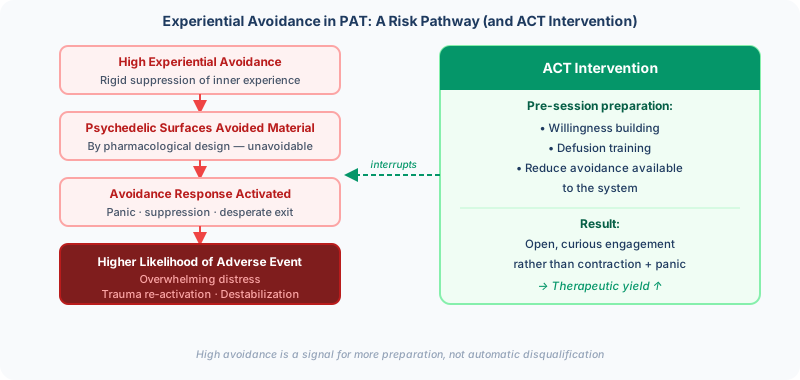
High levels of experiential avoidance, rigidly held cognitive fusion ("I cannot tolerate this"), and strong habitual thought-suppression strategies should not automatically disqualify a candidate for PAT — but they signal the need for more preparation, specifically targeted at building willingness and defusion capacity, before the dosing session proceeds.
The "Values Bypass" Risk
A specific risk ACT identifies is what might be called values bypass: the use of profound mystical insight to avoid the ordinary, difficult work of committed action. A person can have a genuinely transformative psilocybin experience — feel unconditional love, glimpse their deepest values, shed lifelong shame — and then return to an unchanged life because they never translated the experience into any concrete behavioral change.
The mystical quality of the experience can become its own "away move": a peak to return to in memory while avoiding the daily friction of actually living differently. ACT integration work specifically targets this risk by anchoring post-session work in specific, measurable, values-aligned behaviors, not just the emotional residue of the session.
Additional Risks
- Psychological destabilization: Without adequate preparation and integration support, psychedelic experiences can loosen defenses in ways that are difficult to re-stabilize. ACT's grounding in the observer self and values can support re-stabilization, but this requires skilled clinical guidance.
- Spiritual bypassing: Using transcendent experience to avoid rather than engage difficult relational or behavioral work. ACT's emphasis on committed action is a structural antidote.
- Legal and ethical considerations: In most jurisdictions, psychedelic-assisted therapy is not yet legal in standard clinical settings. The intersection of underground, retreat, and emerging regulated contexts creates ethical complexity that no therapeutic framework alone can resolve.
Part X: The Future of ACT and Psychedelic-Assisted Therapy
The convergence of ACT and psychedelic-assisted therapy is not a niche academic interest. It represents a possible answer to one of the field's most pressing questions: how do you reliably convert a profound but temporary neurological opening into durable behavioral and psychological change?
Several developments make this intersection increasingly important:
Process-based assessment: The field is moving toward measuring psychological flexibility as an outcome variable in PAT trials — specifically, whether psilocybin or MDMA sessions increase scores on measures like the Acceptance and Action Questionnaire (AAQ-II). If psychedelics reliably increase psychological flexibility (as the REBUS model and clinical observation suggest), this creates a direct bridge between neurological mechanism and the ACT evidence base.
ACT-informed training for PAT clinicians: As psychedelic therapy training programs proliferate, ACT micro-skills — defusion techniques, values clarification tools, ACT Matrix work — are increasingly being incorporated into facilitator training. The simplicity and accessibility of core ACT techniques makes them practical additions to the PAT toolbox without requiring full ACT expertise.
Research protocols: The most needed next step is controlled trials specifically testing ACT-informed preparation and integration modules as add-ons to existing PAT manuals — for example, comparing standard Johns Hopkins psilocybin integration to ACT-augmented integration on outcomes including psychological flexibility, values-consistent behavior, and long-term symptom reduction.
Scalability: One of ACT's significant advantages in the context of PAT is scalability. ACT has been successfully delivered in brief formats, group settings, digital applications, and community contexts. As PAT scales — and the integration bottleneck becomes a practical public health problem — ACT's adaptability makes it a candidate for group integration programs, digital integration support, and peer-facilitated values work.
The important cautions remain: the evidence for direct ACT+PAT protocols is still early; the field needs training standards and competency frameworks; equity of access — who gets psychedelic therapy and at what cost — is a question that ACT skills alone cannot answer.
Conclusion: From Insight to Action
Acceptance and Commitment Therapy asks a deceptively simple question: given everything your history has given you — the fears, the losses, the defenses you built to survive — what do you most want your life to be about? And are you willing to move in that direction, even in the presence of the pain that moving will stir up?
Psychedelics, at their best, offer a temporary and profound answer to the first question. They can, in a single session, clarify values that years of ordinary life had obscured. They can reveal the cost of avoidance with unsparing clarity. They can dissolve the fusion between self and story long enough to glimpse something truer.
ACT is the framework that helps you hold that answer — not as a memory, not as a peak experience to revisit, but as a direction to move in. Consistently. Imperfectly. Every day.
The psychedelic session opens the window. ACT teaches you to walk through it. Values-based living keeps it open.
References
ACT — Foundational Texts and Research
Hayes, S.C., Strosahl, K.D., & Wilson, K.G. (1999). Acceptance and Commitment Therapy: An Experiential Approach to Behavior Change. Guilford Press.
Hayes, S.C., Strosahl, K.D., & Wilson, K.G. (2012). Acceptance and Commitment Therapy: The Process and Practice of Mindful Change (2nd ed.). Guilford Press.
Wilson, K.G., & Murrell, A.R. (2004). Values work in acceptance and commitment therapy: Setting a course for behavioral treatment. In S.C. Hayes, V.M. Follette, & M.M. Linehan (Eds.), Mindfulness and Acceptance: Expanding the Cognitive-Behavioral Tradition. Guilford Press.
Psychedelic Research — Primary Studies
Mechanism and Phenomenology
Books and Practical Resources
Harris, R. (2008). The Happiness Trap: How to Stop Struggling and Start Living. Exisle Publishing.
Hayes, S.C., & Smith, S. (2005). Get Out of Your Mind and Into Your Life: The New Acceptance and Commitment Therapy. New Harbinger Publications.
Polk, K.L., & Schoendorff, B. (Eds.). (2014). The ACT Matrix: A New Approach to Building Psychological Flexibility Across Settings and Populations. New Harbinger Publications.
Pollan, M. (2018). How to Change Your Mind: What the New Science of Psychedelics Teaches Us About Consciousness, Dying, Addiction, Depression, and Transcendence. Penguin Press.
This post is for educational purposes only. Psychedelic-assisted therapy should only be pursued within legal frameworks, with licensed and trained clinicians, and with comprehensive screening, preparation, and integration support. If you are in crisis, please contact the 988 Suicide and Crisis Lifeline by calling or texting 988.